|
Advertising with us produces results! Increased
sales
Austin, Texas marketing@AnaerobicDigester.com
"Changing the Way the World Makes and Uses Energy"
Thanks electric utilities and electric grid, |
|
Advertising with us produces results! Increased
sales
Austin, Texas marketing@AnaerobicDigester.com
"Changing the Way the World Makes and Uses Energy"
Thanks electric utilities and electric grid, |
Anaerobic
Digester
www.AnaerobicDigester.com
What is an Anaerobic Digester?
An anaerobic digester is a system that takes an organic waste stream and through the process of anaerobic digestion (meaning without oxygen), microorganisms break-down the waste stream which generates biogas in the process. The biogas cannot be used due to the large amount of impurities it contains, so the biogas must cleaned through a biogas to biomethane process after which, the clean biomethane, often referred to as "renewable natural gas" is used just as natural gas, methane or CH4.
The right anaerobic digester and "feedstock" are critical components to optimum production of biomethane which can fuel your own cogeneration or trigeneration power plant.
|
Amine Units * Biogas Plants * Biogas Processing * Biomethane * Gas Dehydration * Gas Sweetening H2S Removal * Landfill Gas to Energy * Pipeline Quality Gas * Sewage Sludge * Wastewater Treatment
|

"Changing the Way the World Makes and Uses Energy"

advertising@AnaerobicDigester.com
Running on "green fuel" such as Biomethane, B100 Biodiesel, Synthesis Gas or natural gas, our CHP Systems are the greenest "clean power generation" systems available as they generate no new greenhouse gas emissions or other hazardous air pollutants.
Clean
Power Generation Solutions
CHP
Systems (Cogeneration
and Trigeneration
Plants
Have Very High Efficiencies, Low Fuel Costs & Low Emissions
The CHP System
below is Rated at 900 kW and Features:
(2) Natural Gas Engines @ 450 kW each on one Skid with Optional
Selective Catalytic Reduction system that removes Nitrogen
Oxides to "non-detect."
The Effective Heat Rate of the CHP System
below is
4100 btu/kW with a Net System Efficiency of 92%.
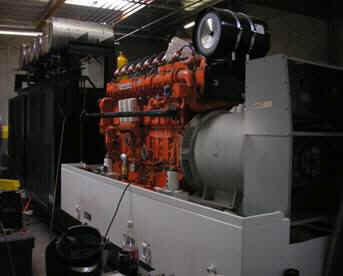
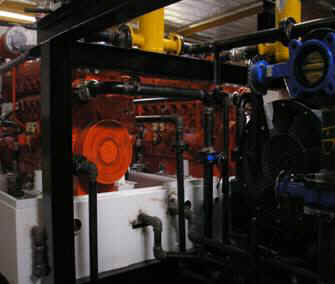
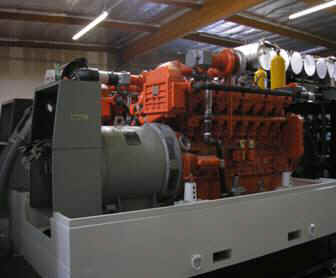
CHP Systems may be the best solution for your company's economic and environmental sustainability as we "upgrade" natural gas to clean power with our clean power generation solutions.
Emissions Abatement solutions reduce Nitrogen Oxides to "non-detect" which means our CHP Systems can be installed and operated in most EPA non-attainment regions!
While
there are many different types of anaerobic
digesters, three designs (below) are the most common found in the
U.S., which are:
1. Anaerobic Lagoons
2. Plug Flow Digesters
3. Complete Mix Digesters
Anaerobic digestion is the bacterial decomposition of organic waste in the absence of oxygen. The two main products of anaerobic digestion are biogas and a solid residual material.
Food scraps, manure, biosolids, as well as Fats, Oil, and Grease (FOG) can all be "digested" anaerobic digesters and the biomethane (cleaned-up and purified biogas) used to fuel a cogeneration power plant.
Benefits
of an Anaerobic Digester:
Anaerobic digesters generate biogas, a renewable source of energy that - when purified into biomethane - can be used just like the natural gas you use in your home or business.
Food and other organic materials disposed of in landfills decompose to create methane, a lethal greenhouse gas with a global warming potential that is 21 times greater than carbon dioxide. Diverting food scraps from landfills to anaerobic digesters reduces methane emissions from landfills.
Fats, Oil, and Grease (FOG) accumulate and can clog pipes and pumps both in the public sewer lines as well as in wastewater treatment facilities. Diverting FOG from the wastewater infrastructure to anaerobic digesters prevents combined sewer overflows (CSO), thereby protecting water quality and saving money.
Anaerobic digesters provide a management method for manure that; improves the quality of water, improves air quality, reduces methane emissions from manure lagoons and storage ponds and minimizes odors.
Using the solid residual as a soil amendment can reduce the need for chemical fertilizers, improve plant growth, reduce soil erosion and nutrient run-off, alleviate soil compaction, and help improve soil water retention.
How
Anaerobic Digesters
Work, and
How
Anaerobic Digesters
Produce Biomethane:
The
Greenest
of all Biofuels!
Anaerobic
Digesters
recover valuable biomethane from animal manure through a process called
anaerobic digestion.
The following information highlights the process of how Anaerobic
Digesters work.
Biomethane
and Anaerobic Bacteria
Biomethane
or "Renewable
Natural Gas" is practically the
same as is a gas that contains molecules of methane with one atom of carbon
and four atoms of hydrogen (CH4 ). It is the major component of the
"natural" gas used in many homes for cooking and heating. It is
odorless, colorless, and yields about 1,000 British Thermal Units (Btu) [252
kilocalories (kcal)] of heat energy per cubic foot (0.028 cubic meters) when
burned.
Natural gas,
or methane, is a fossil fuel - was created hundreds of thousands of years ago by the anaerobic
decomposition of organic materials (primarily algae). It is often found in association with oil
and coal.
The
same types of anaerobic bacteria that produce natural gas also produce biomethane
today. Anaerobic bacteria are some of the oldest forms of life on
earth. They evolved before the photosynthesis of green plants released large
quantities of oxygen into the atmosphere. Anaerobic bacteria break down or
"digest" organic material in the absence of oxygen and produce
"Biomethane"
as a waste product. (Aerobic decomposition, or composting, requires large
amounts of oxygen and produces heat.)
Anaerobic
decomposition occurs naturally in swamps, water-logged soils and rice fields,
deep bodies of water, and in the digestive systems of termites and large
animals. Anaerobic processes can be managed in a "digester" (an
airtight tank) or a covered lagoon (a pond used to store manure) for waste
treatment. The primary benefits of anaerobic digestion are nutrient recycling,
waste treatment, and odor control. Except in very large systems, biomethane
production is a highly useful but secondary benefit.
Biomethane
produced in anaerobic digesters
consists of methane (50%–80%), carbon dioxide
(20%–50%), and trace levels of other gases such as hydrogen, carbon monoxide,
nitrogen, oxygen, and hydrogen sulfide. The relative percentage of these gases
in biomethane
depends on the feed material and management of the process. When
burned, a cubic foot (0.028 cubic meters) of
biomethane
yields about 10 Btu
(2.52 kcal) of heat energy per percentage of methane composition. For example,
biomethane
composed of 65% methane yields 650 Btu per cubic foot (5,857
kcal/cubic meter).
Anaerobic
Digestion
Anaerobic
decomposition is a complex process. It occurs in three basic stages as the
result of the activity of a variety of microorganisms. Initially, a group of
microorganisms converts organic material to a form that a second group of
organisms utilizes to form organic acids. Methane-producing (methanogenic)
anaerobic bacteria utilize these acids and complete the decomposition process.
A
variety of factors affect the rate of digestion and Biomethane
production. The
most important is temperature. Anaerobic bacteria communities can endure
temperatures ranging from below freezing to above 135° Fahrenheit (F) (57.2°
Centigrade [C]), but they thrive best at temperatures of about 98°F (36.7°C) (mesophilic)
and 130°F (54.4°C) (thermophilic). Bacteria activity, and thus
biomethane
production, falls off significantly between about 103° and 125°F (39.4° and
51.7°C) and gradually from 95° to 32°F (35° to 0°C).
In
the thermophilic range, decomposition and biomethane
production occur more
rapidly than in the mesophilic range. However, the process is highly sensitive
to disturbances, such as changes in feed materials or temperature. While all anaerobic digesters
reduce the viability of weed seeds and disease-producing
(pathogenic) organisms, the higher temperatures of thermophilic digestion result
in more complete destruction. Although
anaerobic digesters
operated in the mesophilic
range must be larger (to accommodate a longer period of decomposition within the
tank (hydraulic retention time), the process is less sensitive to upset or change in
operating regimen.
To
optimize the digestion process, anaerobic digesters
must be kept at a
consistent temperature, as rapid changes will upset bacterial activity. In most
areas of the United States, digestion vessels require some level of insulation
and/or heating. Some installations circulate the coolant from their
biomethane-powered
engines in or around the digester to keep it warm, while others burn part of the
biomethane
to
heat the digester. In a properly designed system, heating
generally results in an increase in
biomethane
production during colder periods.
The trade-offs in maintaining optimum digester temperatures to maximize gas
production while minimizing expenses are somewhat complex. Studies on digesters
in the north-central areas of the country indicate that maximum net
biomethane
production can occur in
anaerobic digesters
maintained at temperatures as low as 72°F
(22.2°C).
Other
factors affect the rate and amount of biomethane
output. These include pH,
water/solids ratio, carbon/nitrogen ratio, mixing of the digesting material, the
particle size of the material being digested, and retention time. Pre-sizing and
mixing of the feed material for a uniform consistency allows the bacteria to
work more quickly. The pH is self-regulating in most cases. Bicarbonate of soda
can be added to maintain a consistent pH; for example, when too much
"green" or material high in nitrogen content is added. It may be
necessary to add water to the feed material if it is too dry or if the nitrogen
content is very high. A carbon/nitrogen ratio of 20/1 to 30/1 is best.
Occasional mixing or agitation of the digesting material can aid the digestion
process. Antibiotics in livestock feed have been known to kill the anaerobic
bacteria in digesters. Complete digestion, and retention times, depend on all of
the above factors.
Sewage
Sludge or Effluent
The
material drawn from the anaerobic digester is called sewage
sludge, or effluent.
It is rich in nutrients (ammonia, phosphorus, potassium, and more than a dozen
trace elements) and is an excellent soil conditioner. It can also be used as a
livestock feed additive when dried. Any toxic compounds (pesticides, etc.) that
are in the anaerobic digesters'
feedstock material may become concentrated in the effluent.
Therefore, it is important to test the effluent before using it on a large
scale.
Anaerobic
Digester Types and Designs
Factors
to consider when designing an anaerobic digester system include cost, size,
local climate, and the availability and type of organic feedstock material.
Anaerobic digesters
can be manufactured from different materials depending on the location, climate
and waste to be processed. These materials include; concrete, steel, brick, or plastic.
Anaerobic digesters
are also manufactured in a variety of shapes, including; silos, troughs, basins or
may also be a pond or lagoon, and may be placed underground or on the
surface. All anaerobic digesters
system designs incorporate the same basic
components:
A
pre-mixing area or tank
A
digester vessel(s)
A
system for using the biogas
A
system for distributing or spreading the effluent (the remaining digested
material).
There are Two Basic Types of Anaerobic
Digesters; Batch and Continuous
Batch
Batch-type
digesters are the simplest to build. Their operation consists of loading the
digester with organic materials and allowing it to digest. The retention time
depends on temperature and other factors. Once the digestion is complete, the
effluent is removed and the process is repeated.
Continuous
In
a continuous digester, organic material is constantly or regularly fed into the
digester. The material moves through the digester either mechanically or by the
force of the new feed pushing out digested material. Unlike batch-type
digesters, continuous digesters produce biogas without the interruption of
loading material and unloading effluent. There are three types of continuous
digesters: vertical tank systems, horizontal tank or plug-flow systems, and
multiple tank systems.
Proper
design, operation, and maintenance of continuous digesters produce a steady and
predictable supply of usable biogas. They may be better suited for large-scale
operations.
Many
livestock operations store the manure they produce in waste lagoons, or ponds. A
growing number of these operations are placing floating covers on their lagoons
to capture the biogas. They use it to run an engine/generator to produce
electricity.
The
cost of designing an constructing an anaerobic
digester
and the associated "balance of
plant" can vary widely. Systems can be put together using
off-the-shelf materials. There are also a few companies that build system
components. Some sophisticated systems have been designed by professionals whose
major focus is research, not low cost.
Before you install one or more anaerobic digesters on your farm or ranch, food processing plant, or facility, you should explore its economic value and potential benefits. You will also want to consider an anaerobic digester "feasibility study" that specifically reviews your operation and requirements.
An
anaerobic
digester usually requires manure from more than 150 large animals to
cost effectively generate electricity. The anaerobic
digester and associated biogas production
can also reduce overall operating costs where costs are high for sewage,
agricultural, or animal waste disposal, and the effluent has economic value.
In the United States, the availability of inexpensive fossil fuels has limited the use of digesters solely for biogas production. However, the waste treatment and odor reduction benefits that anaerobic digesters provide are receiving increasing interest, especially for large-scale livestock operations such as dairies, feedlots, and slaughterhouses.
Multiple
Environmental and Economic Benefits for Installing Anaerobic Digesters:
Anaerobic digesters generate numerous economic and environmental dividends:
Generate
practically free Biomethane (also
referred to as Renewable Natural Gas)
from waste streams. The Biomethane
can then be used as fuel for an onsite power plant such as a cogeneration
or trigeneration power plant.
Using
the free Biomethane
onsite to produce "green energy" qualifies your facility for
additional revenue streams in the form of a Renewable
Energy Credit, Carbon
Dioxide Credits and/or other Greenhouse
Gas Emissions credits.
Reduction
in biological oxygen demand in wastewater by over 50%
Reduction
in nitrogen in wastewater by over 50%
Reduction
in phosphorous in wastewater by over 50%
Dramatic
and significant reductions of odors, pollution of surface and groundwaters
and nutrient runoff from dairy farms (and other Concentrated Animal Feeding
Operations), wastewater treatment plants.
Better neighbors.... facilities that have installed Anaerobic Digesters have fewer complaints from their neighbors as a result of the reduction or elimination of odors.
|
Anaerobic Digester Systems in the U.S. and Europe |
||||||
|
Country |
Biosolids |
Biowaste / Solid |
Agricultural |
Industrial Wastewater |
||
|
Industrial |
||||||
|
Austria |
100 |
3 |
100 |
25 |
||
|
Canada |
50 |
13 |
||||
|
Czech Republic |
10 |
4 |
||||
|
Denmark |
64 |
21 |
5 |
|||
|
Finland |
1 |
3 |
||||
|
Germany |
49 |
1,500 |
91 |
|||
|
Greece |
2 |
1 |
2 |
|||
|
Italy |
4 |
50 |
38 |
|||
|
Netherlands |
2 |
84 |
||||
|
Norway |
17 |
2 |
5 |
|||
|
Portugal |
94 |
3 |
||||
|
Spain |
1 |
6 |
27 |
|||
|
Sweden |
134 |
4 |
3 |
8 |
||
|
Switzerland |
70 |
11 |
69 |
20 |
||
|
U.K. |
200 |
1 |
25 |
26 |
||
|
U.S.A. |
1,600 |
28 |
92 |
|||
|
above
info courtesy of www.usda.gov
|
||||||
What is FOG?
FOG stands for “Fats, Oils and Grease.” FOG is generated in homes and businesses, including anywhere there is a kitchen, cooking, restaurant, animal operation, wastewater treatment plant, car dealership or where machinery and heavy equipment operate.
Many of the foods we eat contain FOG, including; meats, sauces, vegetable oils, salad dressings, deep-fried food (chicken, french fries, fish, etc.), cookies, pastries, butter and many others.
Animal fats and food scraps that go down a sink contribute to FOG problems in sewers. FOG accumulations in the city's sewer system causes obstruction by constricting flow of the sewer pipes, and interfering with the normal operation of your community wastewater treatment system.
FOG is a community problem!
FOG is a major community problem as well as a health hazard from the standpoint of sewage collection, transmission and treatment. FOG is given special significance by the EPA and state environmental agencies due to its inability to mix with water, and its tendency to separate from liquid in the sewer system.
When FOG is released into the sewer lines in any amounts it can seriously degrade the collection system’s ability to remove waste from the city or community. FOG is deposited directly on pipe walls, thus decreasing pipe capacity and, therefore, requiring an increased frequency of cleaning, maintenance, and replacement.
FOG, and in particular, "grease" (grease is a fat that is solid and stable at room temperature) when dissolved in a warm and/or soapy liquid which may NOT appear to be harmful. However, when grease is released into the sewer system - it cools and then the grease solidifies when the grease and fats come out of the solution, which then adhere on the sewer pipe's surfaces.
Sewer lines meet at "lift stations" which are normally positioned in neighborhoods where small amounts of FOG collect and can become a problem. The FOG solidifies and creates huge grease "mats" on the surface of our sewer lift stations which interferes with the efficient functioning of removing sewage effluent from your home or business. These mats of FOG can actually shut the lift station down and if the problem is serious enough, the sanitary sewer lines can backup even to the point of threatening your home or business.
What can you do to help eliminate our company's FOG problems?
Turn your FOG problems and liabilities into a Biomethane asset through our Anaerobic Digester solution!
What if we don't generate an adequate supply of FOG to substantiate the
investment into an Anaerobic Digester?
There may still be a solution which could include our Biogas Plant solution for your operation as well as several others in your area, whereby we collect and haul your FOG to our plant
How does our city or community solve FOG buildup problems?
Never pour grease down sink drains or into toilets!
Scrape all grease and food scraps from your plates, pots, pans, utensils, and grills and other cooking surfaces either into a coffee can or trash for pick-up.
Pour fats, oils and grease into a container such as an empty jar or coffee can.
Don’t
put grease down your garbage disposal! Place a strainer in your sink's
drain to catch food scraps and other solids, and empty the drain
baskets/strainers into the trash for disposal.
What is Biomethane?
Biomethane is "renewable natural gas" made from organic sources - which starts out as "biogas" but then is cleaned up in a process called "Biogas to Biomethane" which removes the impurities in biogas such as carbon dioxide, siloxanes and hydrogen sulfides (H2S).
Biomethane is soon to be re-classified from the category of "Low Carbon Fuels" to "Super Low Carbon Fuel" due to it being the greenest of all biofuels!
"Cleaned-up"
and ready for use in an onsite cogeneration or
trigeneration power plant, the Biomethane could also be
sold to a pipeline company and completely replace the
"natural gas" that is typically transported to markets via the vast
underground pipeline system.
Biomethane will some day replace
much of the "methane" or CH4 that is sold by natural
gas utility companies.
Biomethane has an unlimited supply, whereas the methane sold by gas companies has a limited supply. Biomethane is renewable, whereas the methane sold by your gas utility company is not renewable. Biomethane recovery, use and production generates "Greentags" or a "Renewable Energy Credit" for the owners and is GOOD for our environment.
Biomethane is "naturally" produced from organic materials as they decay. Sources of Biomethane include; landfills, POTW's/Wastewaster Treatment Systems, and every tree or agricultural product that is no longer living. Biomethane is also generated from animal operations where manure can be collected and the Biomethane is generated from anaerobic digesters where the manure decomposes.
Biomethane, after installation of the Biomethane equipment is essentially free, as opposed to buying natural gas, presently costing around $10.00/mmbtu.
Methanogenesis is the production of CH4 and CO2 by biological processes that are carried out by methanogens.
Unlike the price of natural gas, which has been very unstable, and wildly fluctuating from $5.50 to as much as $17.00/mmbtu this past year, Biomethane prices will tend to be more stable over the years. As more and more Biomethane is produced, and produced in reliable and sustainable methods that can fuel our energy needs now and for.
When
It Comes to Energy Independence,
Biomethane, Not Coal, is America's "Ace in the Hole"
and One of the Greenest of All Biofuels
It's
Time to Start Building Our Country's Biomethane Infrastructure &
Producing Biomethane, the Cleanest/Greenest Biofuel!
By: Renewable Energy
Institute and
Biomethane Technologies
www.Biomethane.com
Biomethane,
NOT Coal, is America's True "Ace in the Hole" when it comes to our
energy future, economics, the environment, sustainability and America's
“Energy Independence.” And biomethane is also receiving recognition as one
of the greenest of all biofuels.
For
years now, the coal industry has been touting "coal is America's 'Ace in
the Hole'" when they discuss the abundance of our coal reserves here in the
U.S. and the role they hope coal will play in America's energy future.
But
coal is far from being the “Ace in the Hole” the coal lobby would have
everyone believe. That’s due to
the proverbial “black eye” not to mention the “black lungs” and other
problems that are inherent with “dirty coal.”
While
there may be a place for coal in America's energy future, coal must become
"clean" for America to value it as a possible energy resource. Plans
or building 18 new Coal fired power plants were cancelled in Texas last year due
to the fact that coal isn't clean, and utilities aren't interested in investing
the extra costs for building power plants that use "Clean Coal
Technology" or "Integrated Gasification Combined Cycle" power
plants that also now need to include "Carbon Capture and
Sequestration" technologies to remove the carbon dioxide emissions from the
stacks. Plans for many other coal fired power plants are being cancelled. And
even now, owners of coal fired power plants (pulverized coal) are switching from
coal, to biomass, and biomass gasification technologies, as the writing is on
the wall.
Unless
our society relishes the thoughts of moving back to the caves, and using
candles, and foregoing our modern-day comforts, we need to move forward with
renewable energy technologies such as biomethane, as the alternative is power
shortages and blackouts.
We
believe biomethane represents the best and greenest of all biofuels. There are
no supply problems with biomethane, and we have a virtually unlimited supply for
using biomethane wherever natural gas is presently used as a fuel.
It
should be pointed out that biomethane is chemically no different than natural
gas from the "fossil fuel" form of natural gas or CH4.
However,
one important distinction between biomethane and the fossil-fuel variety of
natural gas, is that the production and use of biomethane is “carbon
neutral” in that the greenhouse gas emissions from biomethane use do not add
any new net greenhouse gas emissions.
Biomethane
starts out as “biogas” but must be cleaned and purified before it can be
used as a renewable fuel. The
process of cleaning and purifying the biogas is called “biogas to biomethane.”
The impurities that are found in biogas include hydrogen sulfides,
siloxanes, and carbon dioxide. When the impurities are removed from biogas, it
is then referred to as biomethane and available for use as a clean fuel, just as
the fossil-fuel form of natural gas is used.
Biomethane reserves and supplies, unlike fossil-fuel natural gas, are virtually unlimited. Biomethane is produced from many sources including anaerobic digesters, wastewater treatment systems, landfills and most agricultural and forestry operations. Last year, the first Biomethane NGV refueling station was opened in Eugendorf, Austria. Like a gas station provides gasoline for cars, the the NGV Biomethane station in Eugendorf provides biomethane for NGVs (Natural Gas Vehicles). Presently, the station provides a blend of biomethane and natural gas. Eventually, they hope to provide 100% biomethane for natural gas vehicles. Companies and researchers in Germany and Austria have determined that “Cellulosic Biomethane” is the greenest of all biofuels, and the least expensive biofuel to produce. Germany and Austria are now planting vast amounts of a form of Kentucky Bluegrass which will be harvested for use in producing “Cellulosic Biomethane,” through anaerobic digesters and fermentation.
Researchers
from around the world, starting in Austria, are finding that grasses such as
Kentucky Bluegrass are easily converted into biomethane as well as organic
fertilizer. Cellulosic Biomethane production doesn’t require the fermentation
of sugars or starches - as the first generation of liquid biofuels – requiring
grains and oilseeds from food crops. As the Austrian Cellulosic Biomethane
project shows, biomethane can be produced from a cellulosic biomass feedstock
like grass. Yield estimates from the Austrian Cellulosic Biomethane research
indicate that one natural gas vehicle can travel 10,000 to 15,000 miles on just
one acre of Kentucky Bluegrass that was processed into biomethane.
At
a Jan. 8, 2009 public workshop held by the California Natural Gas Vehicle
Coalition, they documented the superior benefits and potential of biomethane as
a clean, renewable energy resource. The
California Natural Gas Vehicle Coalition stated that Biomethane should be
classified as a "Super Ultra Low Carbon fuel."
Super Ultra Low Carbon fuel is defined as providing at least an 82
percent reduction in greenhouse gas emissions - based on the California Air
Resource Board’s analysis of biomethane from landfill gas.
Biomethane
has a carbon dioxide emissions intensity of only 11 as compared with:
67.9 for natural gas
95.8 for diesel
96.7 for gasoline
Biomethane
can displace and substitute the equivalent of 29% percent of all petroleum
diesel transportation fuel used - almost immediately.
According
to the California Energy Commission and the Biomass Collaborative, landfills,
wastewater treatment, and dairy waste sources - which are "developable
today" and can start producing Biomethane almost immediately, with low
investment/high returns, could yield 121 billion cubic feet of Biomethane. At
$8.00/mmbtu, that's a $1 billion market opportunity in California alone.
The 121 billion cubic feet of Biomethane equals about 860 million gallons
of petroleum diesel. California alone uses about 3 billion gallons of diesel
annually for transportation. Emerging biomass gasification and Biomethanation
technologies could more than double Biomethane supplies.
Biomethane
- like natural gas from "fossil fuels" - can be compressed or
liquefied. And using "Compressed Biomethane" is a significantly better
choice as a transportation fuel than traditional "natural gas."
Biomethane
is the "natural, natural gas" and is far better for the environment
and the economy than natural gas. Biomethane, when "vented" to the
environment, is 21 times more hazardous to the climate than carbon dioxide
emissions which are the only emissions (and water vaport) from compressed
natural gas vehicles' engines when used as a fuel.
Again,
we are reminded that Biomethane is the same chemical compound as natural gas:
CH4, and completely replaces and substitutes for natural gas. Engines, turbines,
boilers and every other natural gas appliance can use Biomethane without any
adjustments or modifications - just like natural gas.
Biomethane
supplies, as opposed to natural gas supplies from the fossil fuel industry, are
available in an unlimited supply.
Moving
forward with a “Biomethane Infrastructure” is the direction our country
needs to be moving as one of our fuel choices as we become energy-independent.
Every MCF of Biomethane that we use displaces about 8 gallons of gasoline
and creates jobs that will never be outsourced or downsized.
(Some
of the above information from the California Natural Gas Vehicle Coalition.)
|
Anaerobic Digesters * Biogas Plants * Biogas Processing * Biomethane * Gas Dehydration * Gas Sweetening H2S Removal * Iron Sponge * Methane Recovery * Pipeline Quality Gas * Wastewater Treatment |
"Changing the Way the
World Makes and Uses Energy"
Austin, Texas
marketing@AnaerobicDigester.com
Biomethane
The Renewable Natural Gas & Greenest of all Renewable
Fuels!
www.Biomethane.com
The Unlimited Potential for Biomethane
and Renewable Natural Gas
Sweden is now leading Europe and the rest of the world in the pursuit of biomethane.
According to
recent studies by researchers, professors and universities in Sweden, biomethane
is significantly more economic and less energy intensive to produce today than
any biofuel (i.e. E100
Ethanol and B100 Biodiesel, etc.).
If the U.S. were to similarly emphasize the production of biomethane as Sweden is now doing, the U.S. could significantly increase the supply of Biomethane - a renewable, clean fuel with an unlimited supply.
Biomethane
can be produced from landfill gas, sewage and animal and crop waste. Besides supplementing
our existing natural gas supplies, Biomethane
would provide huge greenhouse gas emissions reductions.
Based on an analysis conducted for the Department of Energy in the 1990's, it appears that at least 1¼ quadrillion BTUs of methane could reasonably be produced using exiting landfill gas to energy sites, wastewater treatment systems and animal waste sources - Concentrated Animal Feeding Operations alone.
If the Biomethane produces in the U.S. were used for natural gas vehicles, it would displace approximately 10 billion gallons of gasoline, per year! This is 10 times the amount (1 billion gallons of gasoline) per year projected for natural gas (the fossil fuel) in the Annual DOE outlook.
Regarding Greenhouse Gas
Emissions and
Biomethane/Renewable Natural
Gas vs. Gasoline
Gasoline produces about 110% more Greenhouse Gas Emissions than Biomethane which would have otherwise been flared or vented to the atmosphere.
In the U.S., it is now feasible to capture and use about 1.25 quadrillion Btu's of Biomethane from landfills, animal waste and POTWs (wastewater treatment systems) alone. This is equivalent to about 6% of all of the natural gas presently used in the U.S.
If
this Biomethane were used as a
transportation fuel in natural
gas vehicles, the Biomethane would displace 10 billion gallons of gasoline per
year!
Other
Benefits and Incentives of Biomethane:
The Federal Biogas/Biomethane Tax Credit:
Equal to 2.0 cents per KWH (approximately $5.66 per MMBtu) for electricity produced on-site from
Biomethane.
All other uses of biogas and Biomethane in vehicles and producing electricity off-site) do not
presently qualify for the Federal Biogas/Biomethane Tax Credit.
Biomethane
& Synthesis
Gas
the Perfect Renewable Fuels & Now the
Leading Renewable Fuels to Fuel the Future
As Biomethane
is a near perfect fuel, and since Biomethane
represents the best of all biofuels in terms of Recycling Carbon, and has the
highest Net Energy Balance, and as
Biomethane technologies such as Anaerobic
Digesters and Biomass
Gasification development increases and becomes even more commonplace, one of
the fundamental questions is: what is the size of the potential biomass resource
supply in the U.S.?
In April 2005, the DOE and the U.S. Department of Agriculture (USDA)
co-published a report assessing the potential of the land resources in the U.S.
for producing sustainable biomass: Biomass as Feedstock for a Bioenergy and
Bioproducts Industry: The Technical Feasibility of a Billion-Ton Annual Supply.
Looking at forestland and agricultural land, the two largest potential biomass
sources, this study estimates that the U.S. can sustainably produce up to 1.3
billion tons of biomass feedstock by mid-century. This would be enough feedstock
to produce 60 billion gallons of B100 Biodiesel and
E100 Ethanol with today's
technologies.
This study doesn't address the opportunities for Biomethane production from biomass feedstock or Biomass Gasification technologies. Some recent estimates indicate that Biomethane could replace up to 50% of present natural gas consumption in the U.S. and in some countries, such as Iceland, Biomethane already provides 100% of the natural gas requirements.
There
are many assumptions in the Billion Ton Study report that impact these
estimates, but we believe the estimates reasonably reflect the potential
availability and impact of biomass resources.
Of the total estimated resource, the study suggests that forestlands in the
contiguous United States can produce approximately 368 million dry tons
annually. This projection includes 52 million dry tons of fuelwood harvested
from forests and woodlands, 145 million dry tons of residues from wood
processing mills and pulp and paper mills, 47 million dry tons of urban wood
residues including construction and demolition debris, 64 million dry tons of
residues from logging and site clearing operations, and 60 million dry tons of
biomass from fuel treatment operations.
Biomass to Biofuels
By "converting" biomass wastes – such as municipal solid waste, sewage sludge, crop residues, energy crops, and manure – into biofuels, this will resolve the energy, environmental and political problems in an economical and environmentally sound manner - that will produce over one million new jobs.
According
to Jeff Seisler, Director of the European Natural Gas Vehicle Association,
"Biomethane
has
an outstanding potential as a multifaceted solution to multifaceted social
problems: urban and agricultural waste management, water purification, and clean
air. Urban and agricultural waste can be processed into usable methane, as can
the sewage during the water purification process. Cleaning and compressing the
gas for use in vehicles then provides cleaner air than petroleum-consuming
vehicles."
Continuing, Mr. Seisler states about Biomethane;
"this environmental 'closed loop waste-to-energy-to-fuel used in vehicles
that again truck the next load of waste to the energy processing
plants-substitutes fossil fuels with a renewable resource and reduces greenhouse
gases 100% as compared to over gasoline vehicles (on a well-to-wheel basis).
According
to Peter Boisen Chairman, of ENGVA, "various well respected European
research institutes now estimate more than three times better fuel output per
hectare of land used than if going for ethanol or biodiesel. Sweden currently
has a 51% Biomethane
share,
and Switzerland 37%. France, Norway, Germany and Austria use smaller amounts for
vehicles. Iceland, completely without natural gas, uses 100% biomethane in its
NGVs," Boisen says. Continuing, Boisen adds, "China, India,
Korea, the Ukraine, Spain and Italy are other examples of countries now starting
up projects where Biomethane
will be used as a vehicle fuel."
"With the energy efficiency of the gas production process at 50% to 70%
it's hard to think of a more socially acceptable and economic energy value for
the transportation sector," Boisen says.
"Governments need to get out of their liquid fuel paradigm to refocus and
balance their policies and communications to support the development of a Biomethane
infrastructure. In Europe Biomethane
has the potential to replace 20% of the
petroleum consumed in the transport sector by 2030."
Biomethane
and
Synthesis Gas;
The Best of All Renewable Fuels!
1. Natural Gas (the non-renewable fossil fuel) is one of the most common and
harmful of All Greenhouse
Gas Emissions.
2. Natural Gas (the non-renewable fossil fuel) is 21 Times More Harmful to the Climate than Carbon
Dioxide Emissions.
Stated another way,
Natural Gas (the non-renewable fossil fuel) Causes Global Warming and Climate Change to Increase 21 Times Faster than Carbon
Dioxide Emissions.
3. Biomethane
and Synthesis
Gas can both be
used to replace Natural Gas with ease.
4.
Biomethane
and Synthesis
Gas are
each viewed as a "Renewable Natural
Gas."
4. Biomethane
and Synthesis
Gas are each
profitable to produce and will produce the biggest reductions in global Greenhouse
Gas Emissions when replacing non-renewable fossil fuels.
5. Replacing non-renewable fossil fuels with Biomethane and Synthesis Gas will also replace the fossil fuels imported countries, reducing America's trade deficit and help make us energy independent, while increasing American jobs.
We deliver solutions:
Advertising
Business Development
Capital Access
Engineering
Marketing Strategies
Investors & Investment Inquiries
Public Relations
Sales Solutions
That produce results:
Increased
sales
Greater market share
Competitive advantage
Increased shareholder value
New customers and projects
“spending
hundreds and hundreds and hundreds of billions of dollars every year for
oil, much of it from the Middle East, is just about the single stupidest
thing that modern society could possibly do. It’s very difficult to think of anything
more idiotic than that.”
~ R. James Woolsey, Jr., former Director of the CIA
According to R. James Woolsey, for Director of the Central Intelligence Agency, “The basic insight is to realize that global warming, the geopolitics of oil, and warfare in the Persian Gulf are not separate problems — they are aspects of a single problem, the West’s dependence on oil.”
"The Future of Energy is Net Zero Energy!" sm
Ammonia Chillers * Battery Energy Storage * Bidirectional Inverters * Bidirectional Power
Energy Efficiency Measures * Energy Master Planning * Energy Storage * Micro-Grids
Net Zero Energy * Net Zero Energy Retrofit * Solar Cogeneration * Solar Trigeneration
Homeowners, Business Owners and Commercial Building Owners;
Install our Net Zero Energy System
sm
and
ZERO out your energy bill from your electric utility!
American Energy Plan
sm
www.AmericanEnergyPlan.org
3-5 million new jobs
Fuel Savings of > $1.50/gallon
American Energy Independence
Ends the worst economic depression of all time

NO FOREIGN OIL!
Support
Renewable Energy
and America's
Renewable Energy Technologies
resources and companies!
We support the Renewable Energy Institute by donating a portion of our profits to the
Renewable Energy Institute
in their efforts to reduce fossil fuel use by transitioning to Renewable
Energy Technologies and reducing/eliminating Carbon
Emissions, Carbon
Dioxide Emissions and Greenhouse
Gas Emissions.
The Renewable Energy Institute
is "Changing The Way The World Makes and Uses Energy" SM
by providing research & development, funding and resources that reduce the
cost of Renewable
Energy Technologies and
making a faster transition to Carbon Free
Energy, Clean
Power Generation, & Pollution Free
Power."
Follow us on Twitter:
#AnaerobicDigester #Digester #Biogas #Biomethane
"Changing the Way the
World Makes and Uses Energy"


Anaerobic
Digester
www.AnaerobicDigester.com
marketing@AnaerobicDigester.com
AnaerobicDigester.com
Copyright © 2003
All Rights Reserved
